
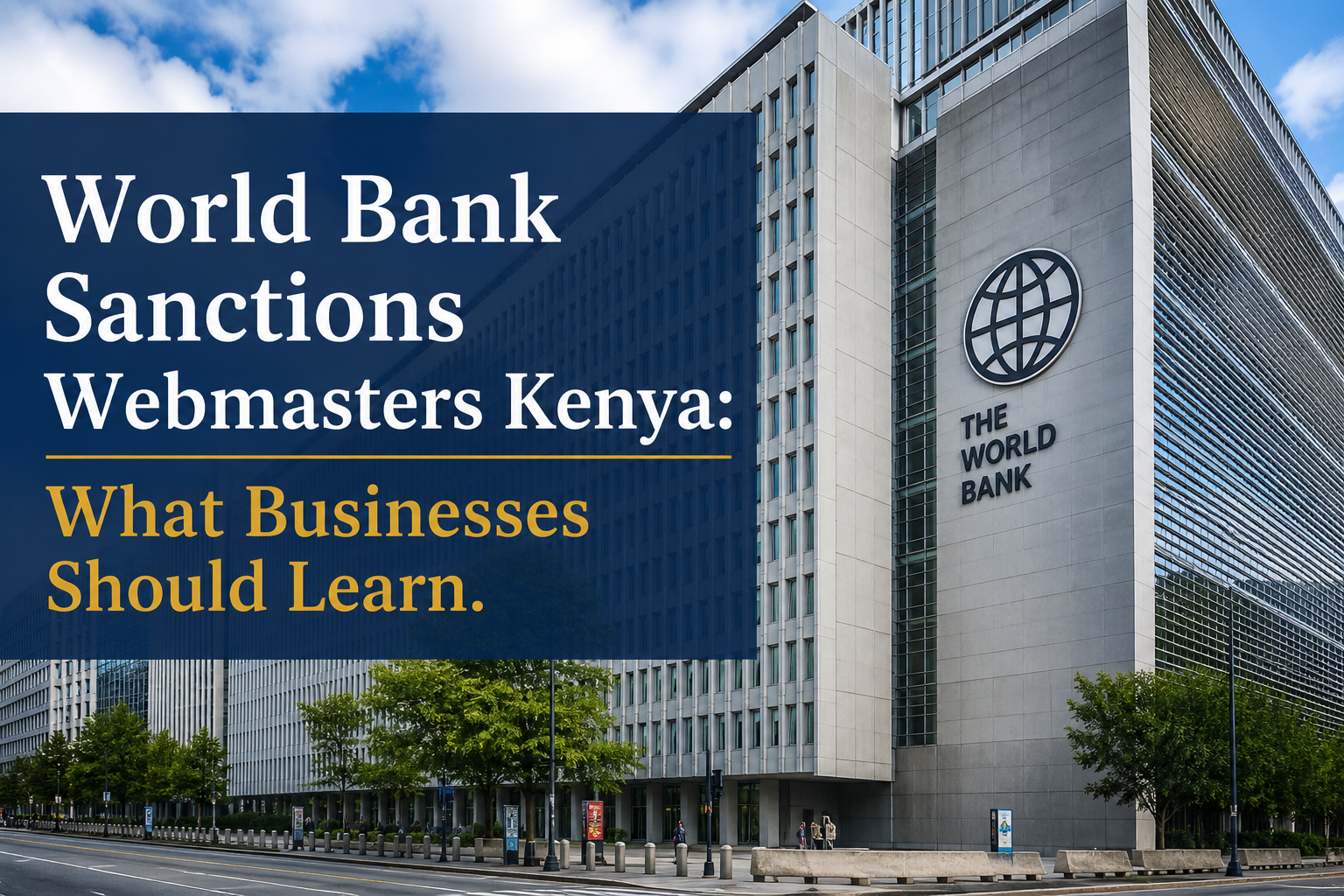
The World Bank Group’s Sanctions Board Decision No. 147, issued on 8 June 2026, is a useful reminder that, in development-funded procurement, the integrity of the bid does not end when the contract is awarded.
The Sanctions Board imposed debarment with conditional release for a minimum of five years on Webmasters Kenya Ltd. and its Chief Executive Officer, together with certain Affiliates, following findings of fraudulent and obstructive practices.
The respondents were found to have misrepresented the availability of two key personnel whose CVs had been submitted as part of a technical proposal. The alleged misrepresentations were connected to approximately US$98,000 in remuneration under the contract.
More significantly, the case demonstrates that audit readiness is itself a compliance obligation.
The World Bank requested organisational, contractual, accounting, third-party and compliance records. Although some material was eventually produced, substantial documentation, including accounting records and invoices, remained outstanding. The Sanctions Board concluded that the failure to meaningfully comply with the requests materially impeded the Bank’s inspection and audit rights.
For businesses participating in World Bank, MDB, government or donor-funded procurement, the implications are practical.
First, tender information must be treated as a compliance statement, not merely a sales document. Proposed personnel, qualifications, experience, subcontractors and other material representations should be verified before submission and monitored throughout contract negotiations and implementation.
Second, document retention is not an administrative function. Businesses should be able to reconstruct the basis on which a bid was submitted, how the contract was performed and how relevant decisions were made.
Third, an audit request should trigger a controlled compliance response. Incomplete production, prolonged silence or informal attempts to manage an investigation can create a separate and potentially serious risk.
The consequences extend beyond a single contract. The decision renders the respondents ineligible to participate in or benefit from Bank-financed projects, extends the sanctions to certain Affiliates and allows for potential enforcement by other participating MDBs under the Cross-Debarment Agreement.
The lesson for businesses is therefore straightforward: procurement compliance is not simply about winning the contract. It is about being able to defend every material representation and produce the underlying record long after the bid has been submitted.
At Manoah & Company Advocates, we advise businesses and development-sector organisations on procurement integrity, anti-corruption compliance, corporate governance, investigations and regulatory risk.
Read the World Bank Group Sanctions Board Decision No. 147